
Why the Sky Turned Orange Today and How to Protect Your Family, Pets and Yourself
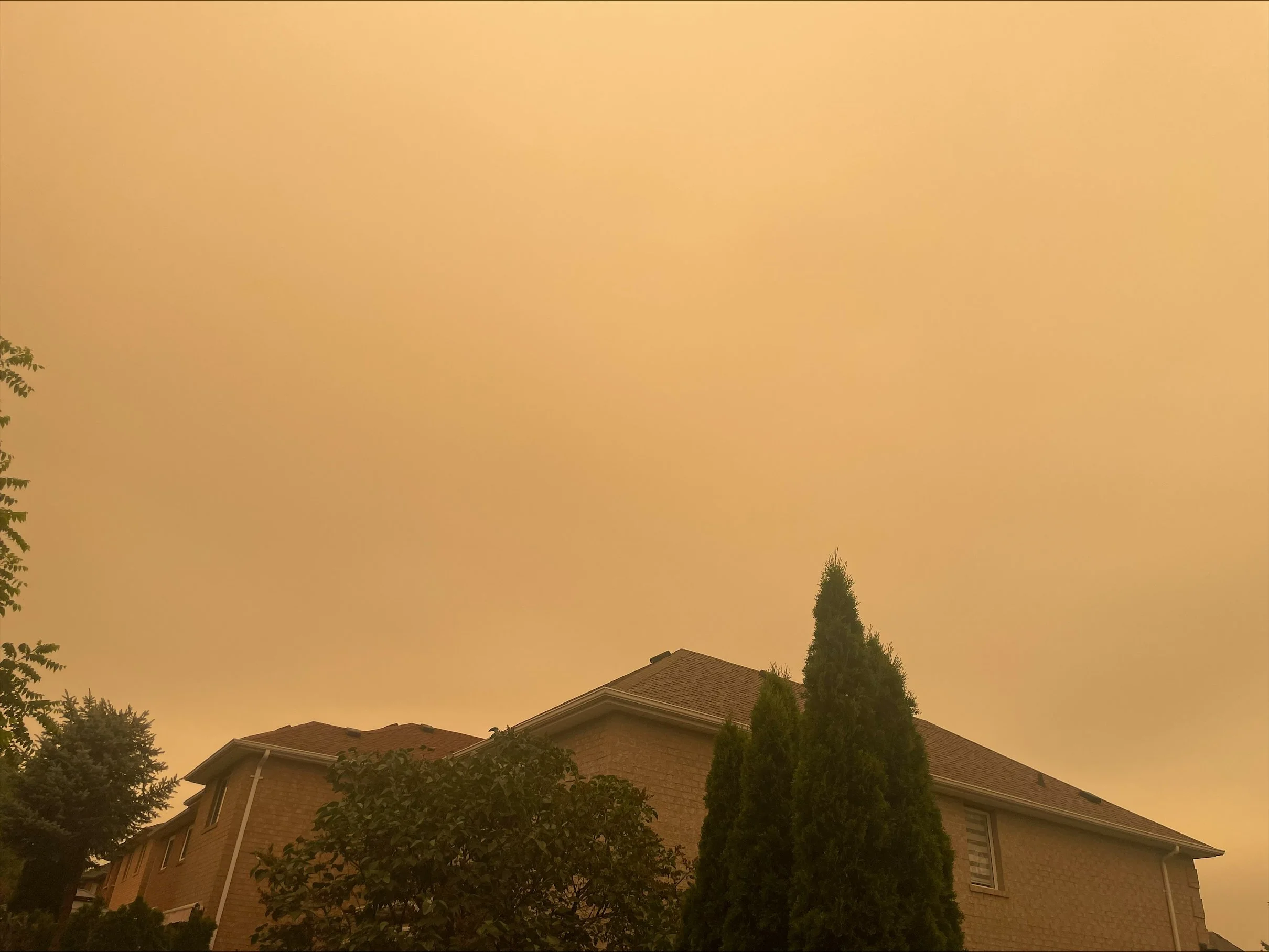
If you looked outside today, you probably noticed something unusual. The sky had an orange glow, the sun appeared deep red, and visibility wasn’t quite what we’re used to seeing here in Newmarket and across York Region.
While it certainly caught everyone’s attention, the orange sky wasn’t caused by a local fire. Instead, it was the result of wildfire smoke from large fires burning in northwestern Ontario. Strong upper-level winds carried that smoke hundreds of kilometres into southern Ontario, creating hazy conditions and affecting the air quality throughout our region.
Why does wildfire smoke make the sky orange?
The answer comes down to science.
Wildfire smoke is made up of millions of tiny particles that remain suspended in the atmosphere. As sunlight passes through the smoke, those particles scatter the shorter blue wavelengths of light while allowing more of the longer red and orange wavelengths to reach our eyes.
That’s why the sun appeared much redder than usual and why the entire sky took on an orange or amber colour.
Although the fires are far from York Region, smoke can travel incredible distances through the atmosphere. It’s not uncommon for communities hundreds or even thousands of kilometres away to experience poor air quality during an active wildfire season.
What does today’s Air Quality Alert mean?
Environment and Climate Change Canada, along with the Ontario Ministry of the Environment, Conservation and Parks, issued an Orange Air Quality Alert for our area, with the Air Quality Health Index (AQHI) reaching 10+, which is considered High Risk.
York Region Public Health is encouraging residents to take precautions until conditions improve, which are currently expected to begin Friday morning. york.ca/outdoorair or phone 1-800-361-5653 ext 711
Who should be most careful?
While everyone should pay attention to air quality, some people are more vulnerable to wildfire smoke, including:
Seniors
Young children
Pregnant individuals
People with asthma, COPD or other lung conditions
People living with heart disease
Just like people, dogs, cats, birds and other animals can breathe in the fine particles found in wildfire smoke. Pets with heart or lung disease, older pets, puppies and kittens are especially vulnerable.
Even healthy adults may experience temporary symptoms such as:
Coughing
A scratchy throat
Irritated or watery eyes
Headaches
Shortness of breath
Fatigue
If you experience chest pain, severe difficulty breathing or heart palpitations, seek medical attention immediately.
How can you protect yourself?
Until the smoke clears, there are several simple steps you can take to reduce your exposure.
Reduce or postpone strenuous outdoor activities.
Keep windows and doors closed if it’s comfortable to do so.
Use your air conditioner on the recirculate setting if available.
Run an air purifier if you have one.
If you must spend extended periods outdoors, consider wearing a well-fitting N95 mask.
Stay hydrated and monitor family members who may be more sensitive to poor air quality.
If you have outdoor sports, recreational activities or physically demanding work planned, consider moving them indoors or postponing them until air quality improves.
Looking out for one another
Events like today’s remind us that wildfire season doesn’t just affect the communities closest to the fires. Smoke can travel great distances and impact the health of people across Ontario.
It’s also a good reminder to check in on older neighbours, friends and family members, especially those living with respiratory or heart conditions, to make sure they have what they need while the air quality remains poor.
Stay informed
Air quality conditions can change throughout the day as wind patterns shift. Before spending extended time outdoors, check the Air Quality Health Index through Environment and Climate Change Canada or York Region Public Health for the latest updates.
As your Ward 6 Councillor, I encourage everyone to stay informed, follow the advice of public health officials and take a few simple precautions until air quality improves. Most importantly, let's continue to look out for one another, especially our older neighbours, young families and anyone living with respiratory or heart conditions.
Thank you for doing your part to help keep our community healthy and safe. I look forward to seeing everyone enjoying the outdoors again when clearer skies return.
Kelly Broome
Ward 6 Councillor, Town of Newmarket